
AccelVeo Logo
Predictive Maintenance

Prevent Downtime with Agents That See Failure Coming

AccelVeo's AI agents monitor your equipment around the clock—detecting early signs of wear, predicting failures, and recommending maintenance actions before breakdowns disrupt production. Reduce unplanned downtime, extend asset life, and keep your lines running.

What is AI Predictive Maintenance?

AI predictive maintenance uses machine learning and sensor data to forecast equipment failures before they occur. By continuously analyzing vibration, temperature, acoustic patterns, and visual signals from factory assets, AI models detect the early signatures of wear and degradation—enabling maintenance teams to schedule repairs proactively, avoid unplanned downtime, and extend the useful life of critical equipment.

Health Monitoring That Learns Your Operation

AccelVeo continuously monitors your critical assets using vibration, temperature, acoustic patterns, current draw, and process variables—detecting the early signatures of wear, misalignment, or fatigue before operators can sense a problem.
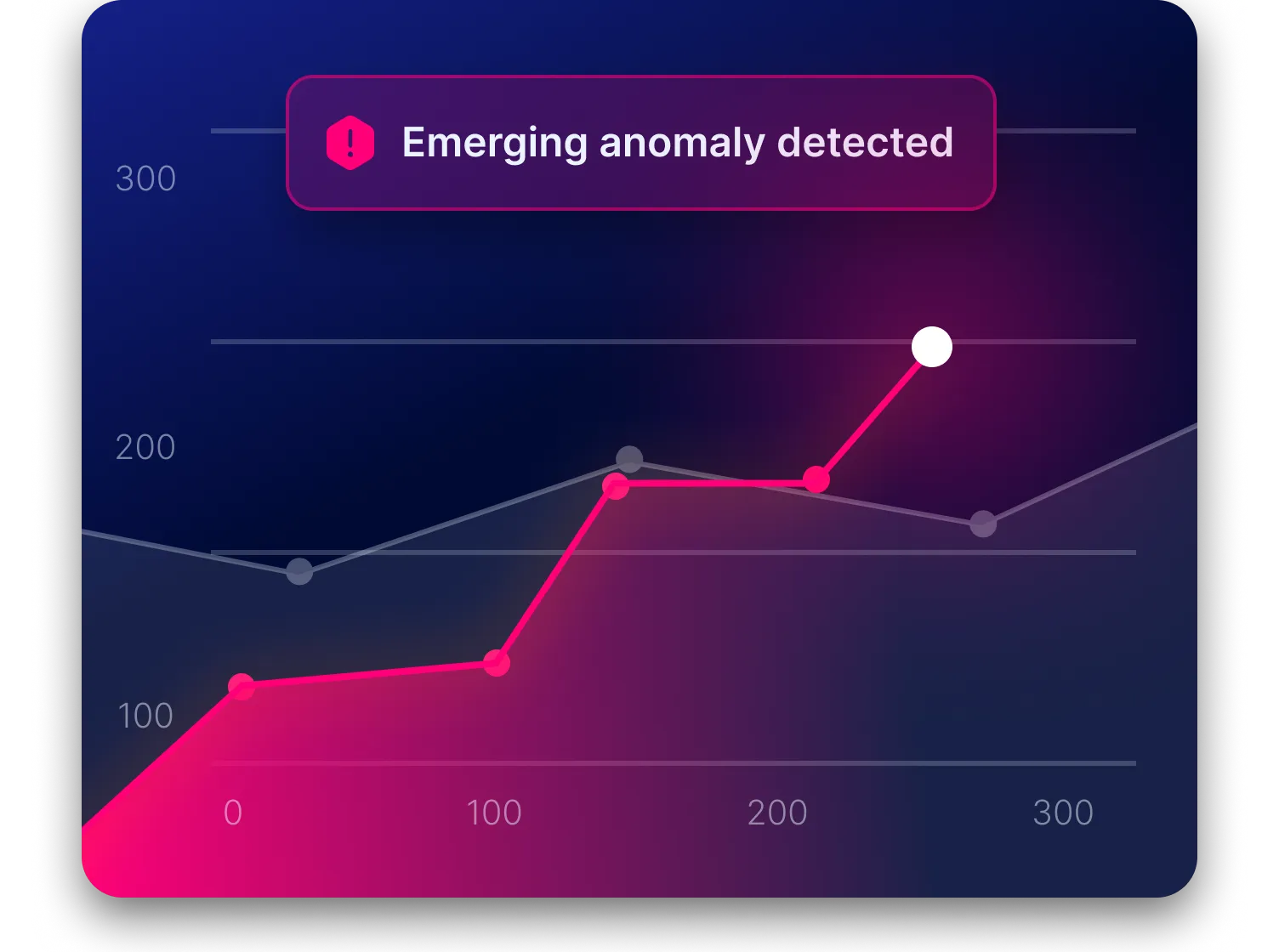
Health Monitoring Dashboard

Reduced Downtime, Longer Asset Life, Higher Throughput

By catching issues early and guiding just-in-time maintenance, you maximize equipment availability, extend the useful life of high-value assets, and keep production flowing without the delays of unexpected breakdowns.
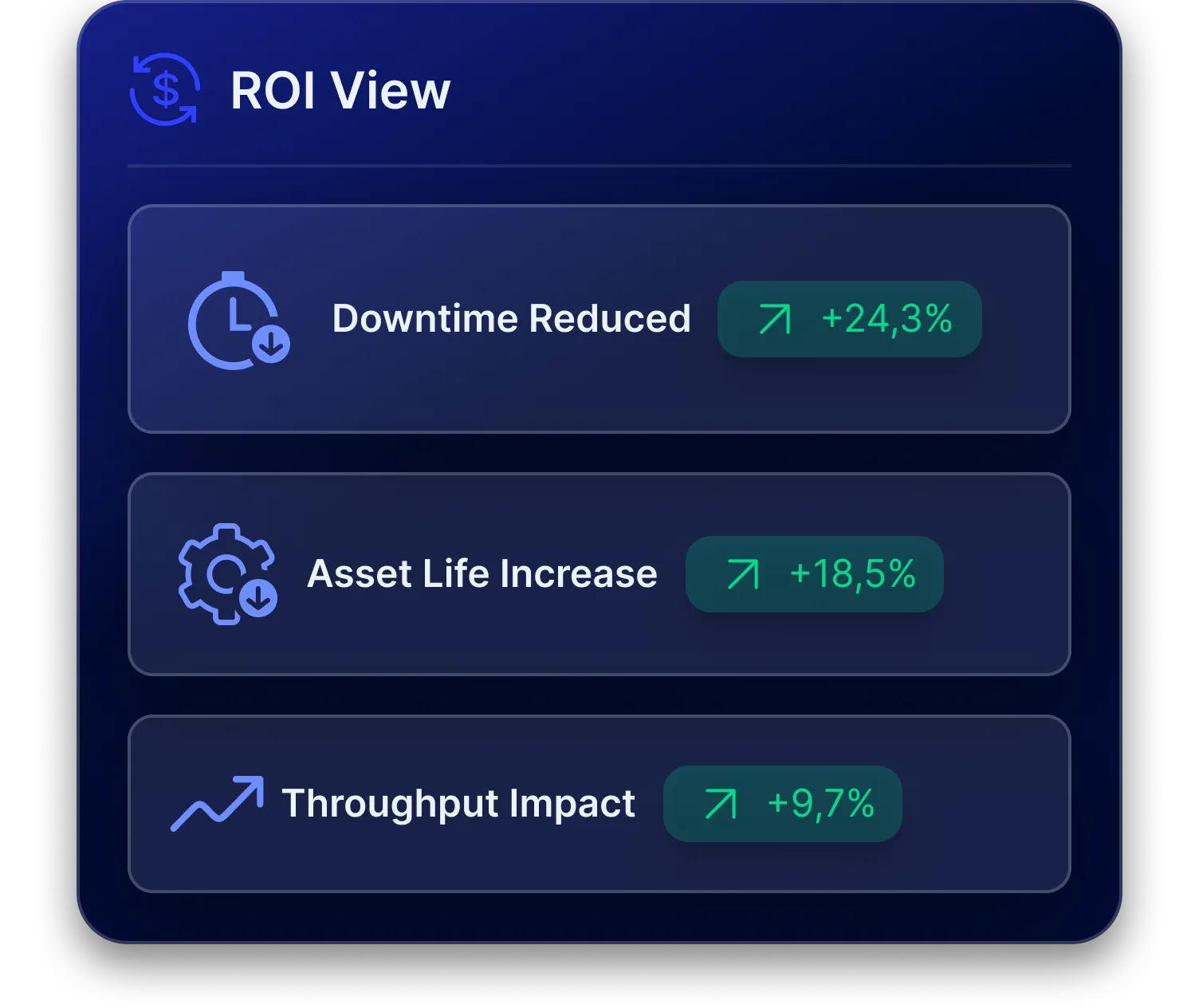
ROI Metrics Dashboard

Vision + Sensor Fusion for Higher Accuracy

AccelVeo combines camera-based visual inspection—spotting leaks, unusual vibrations, or visual damage—with traditional sensor data to give you a fuller picture of asset health and more accurate failure predictions.
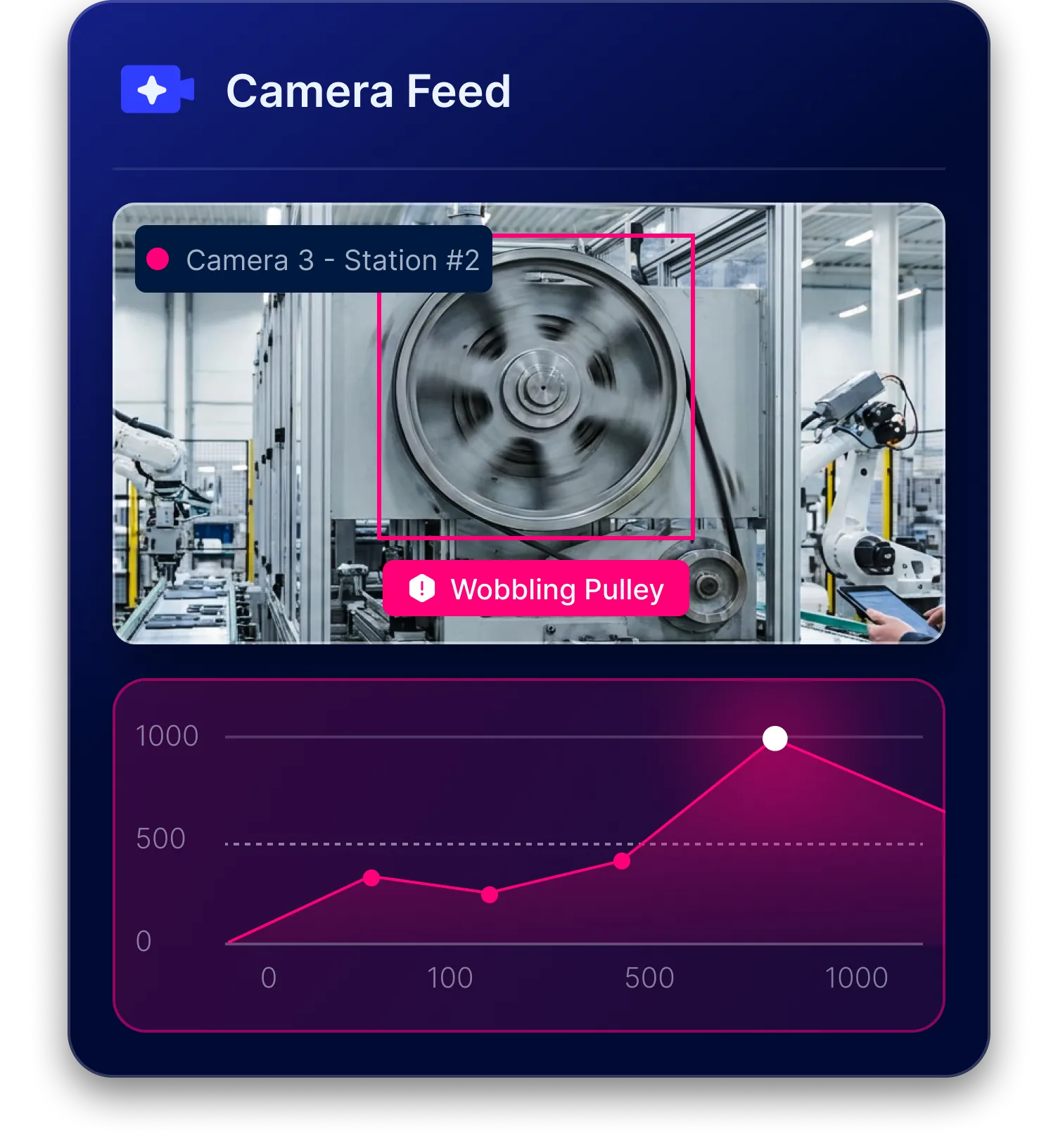
Sensor Fusion Panel

Predict Failure Modes Before They Happen

Agents identify the likely failure modes for each asset—bearing wear, motor overheating, hydraulic leaks—and surface them with estimated time-to-failure so maintenance teams can plan ahead, not react in crisis.
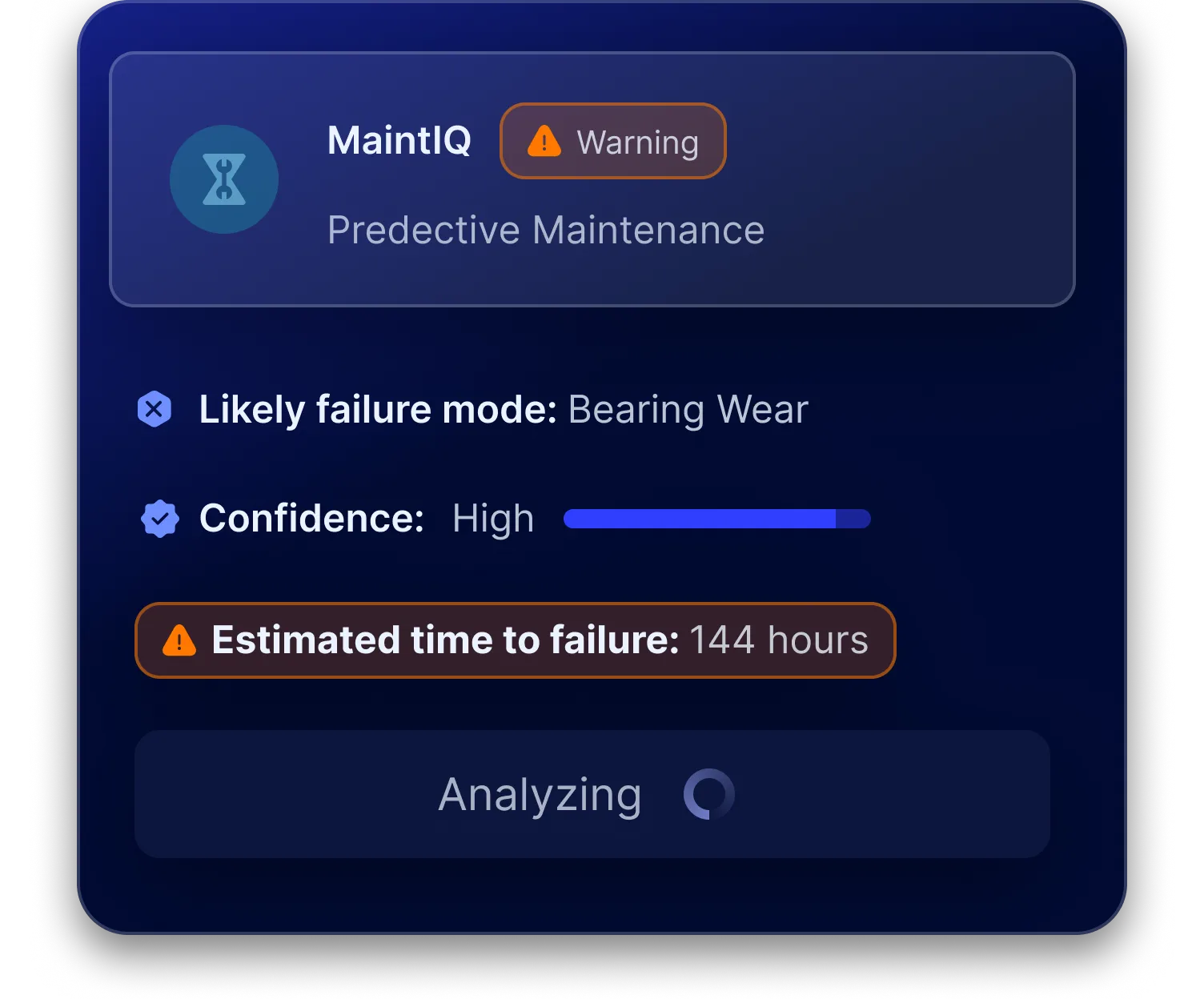
Failure Prediction Dashboard

Automatic Work Orders and Maintenance Plans

When agents detect impending issues, they automatically draft work orders, maintenance tasks, and even parts requisitions—ready for review and approval, not manual paperwork.
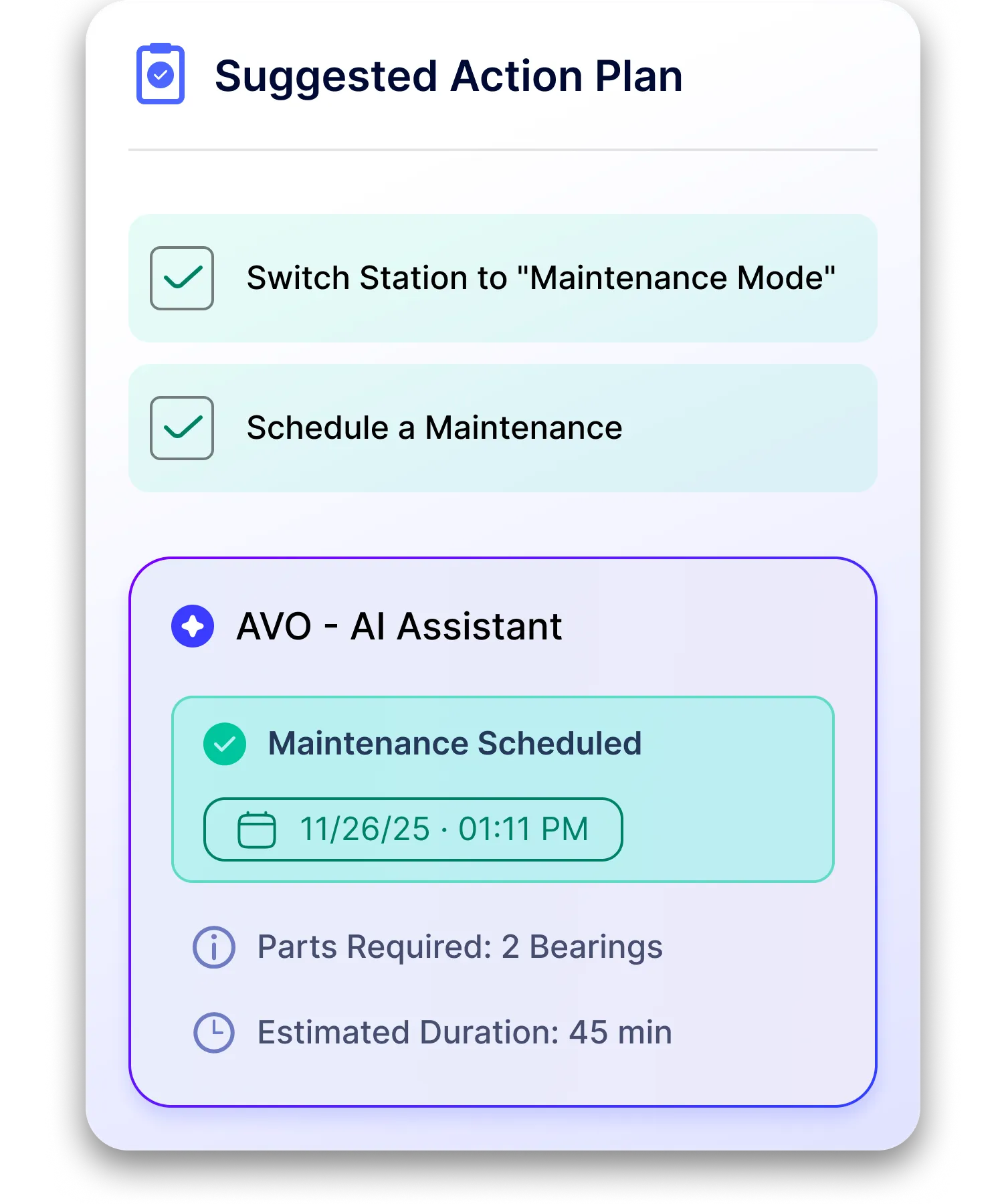
Work Orders Panel

Early Warning Signals for Operators and Supervisors

Alerts are sent to the right people at the right time—supervisors, maintenance planners, and floor operators—so teams can coordinate proactive repairs without halting production.
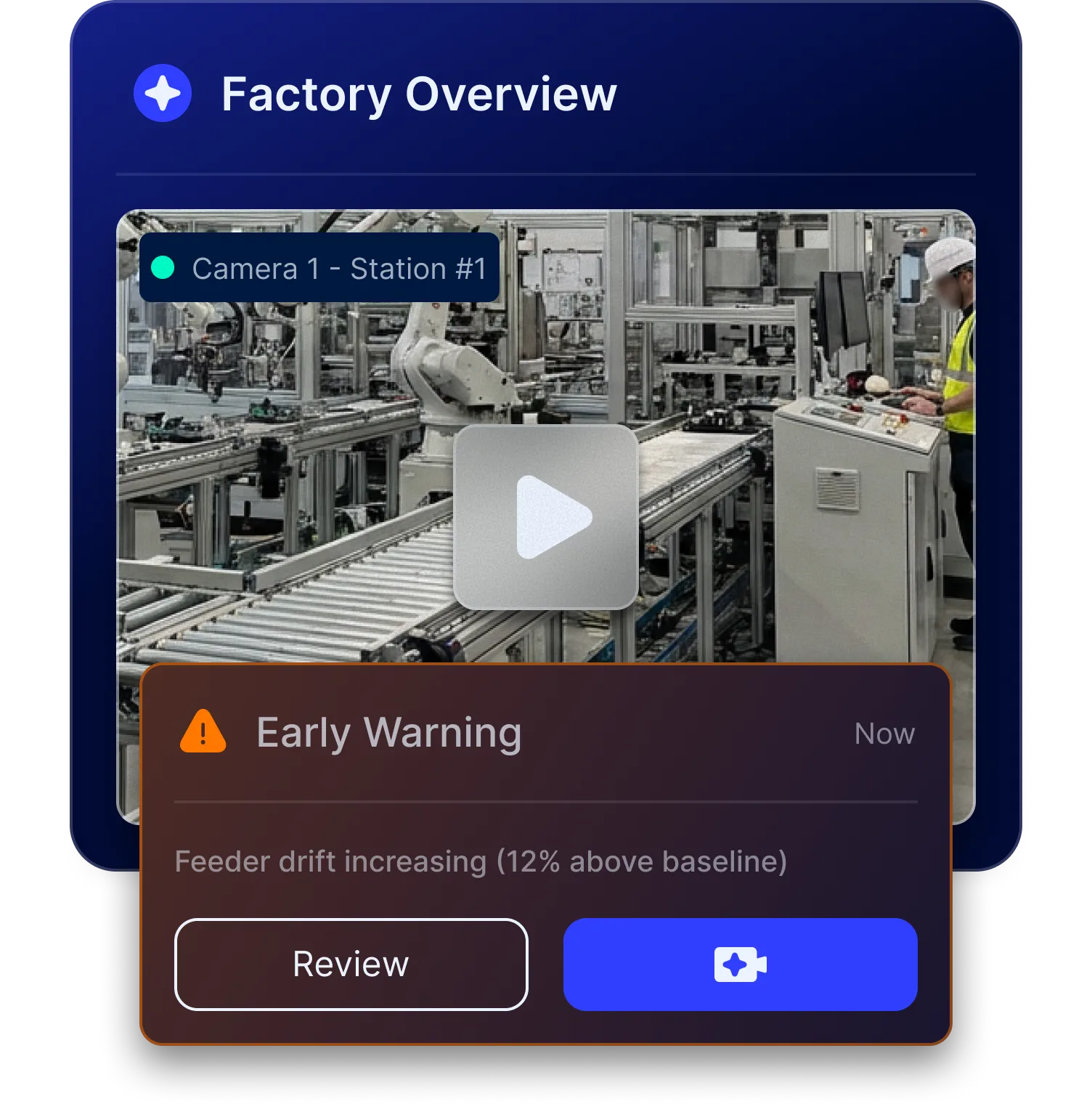
Early Warning Panel

Automated Root-Cause Insights for Faster Fixes

When something goes wrong, agents trace the chain of events—correlating sensor anomalies, process deviations, and visual evidence—to highlight the most likely root cause, reducing time spent troubleshooting.
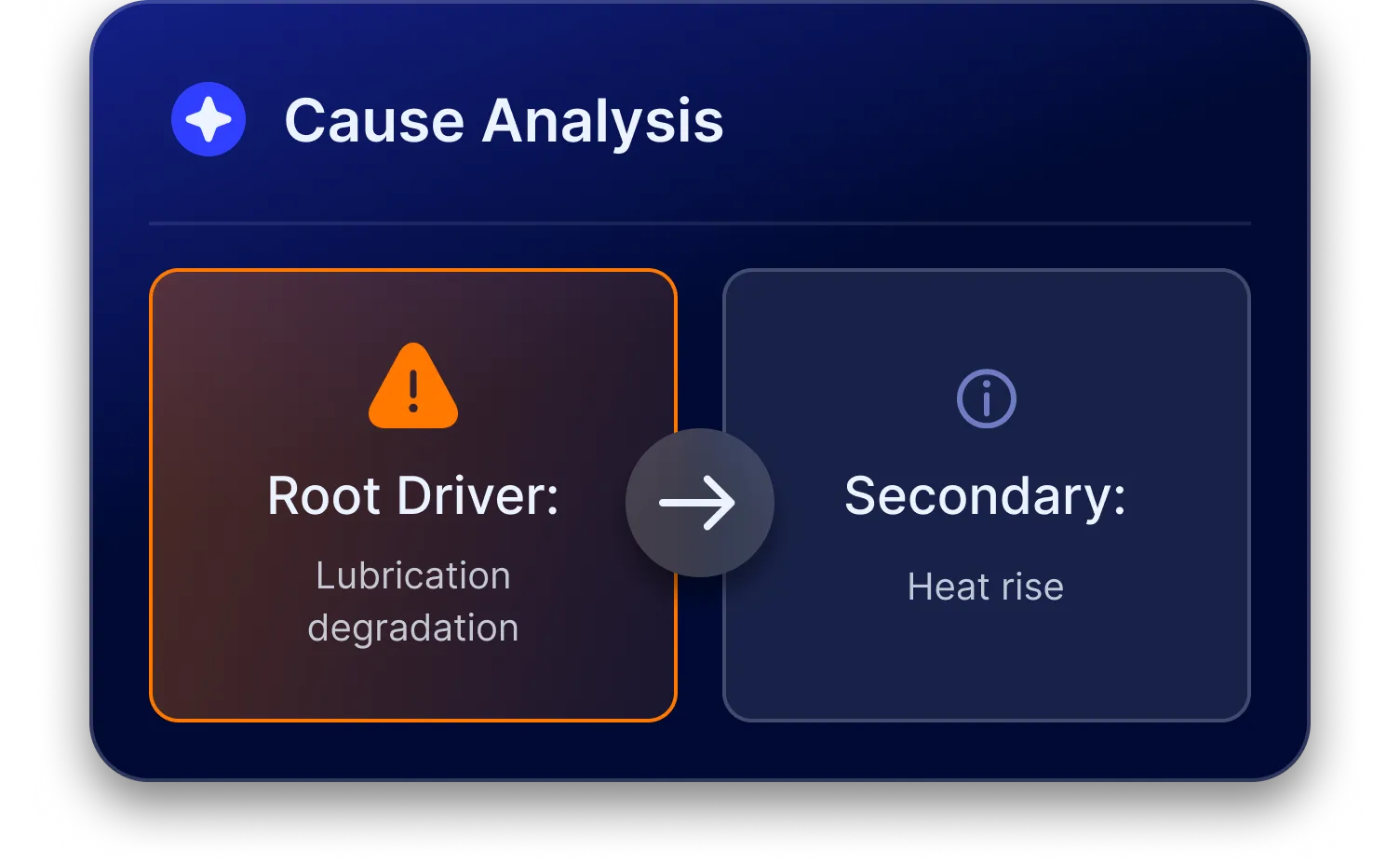
Root Cause Analysis Panel

Verification After Maintenance

After repairs are completed, agents verify that the asset is performing as expected—confirming vibration levels, temperatures, and outputs are back to baseline—so you can confidently return to full production.
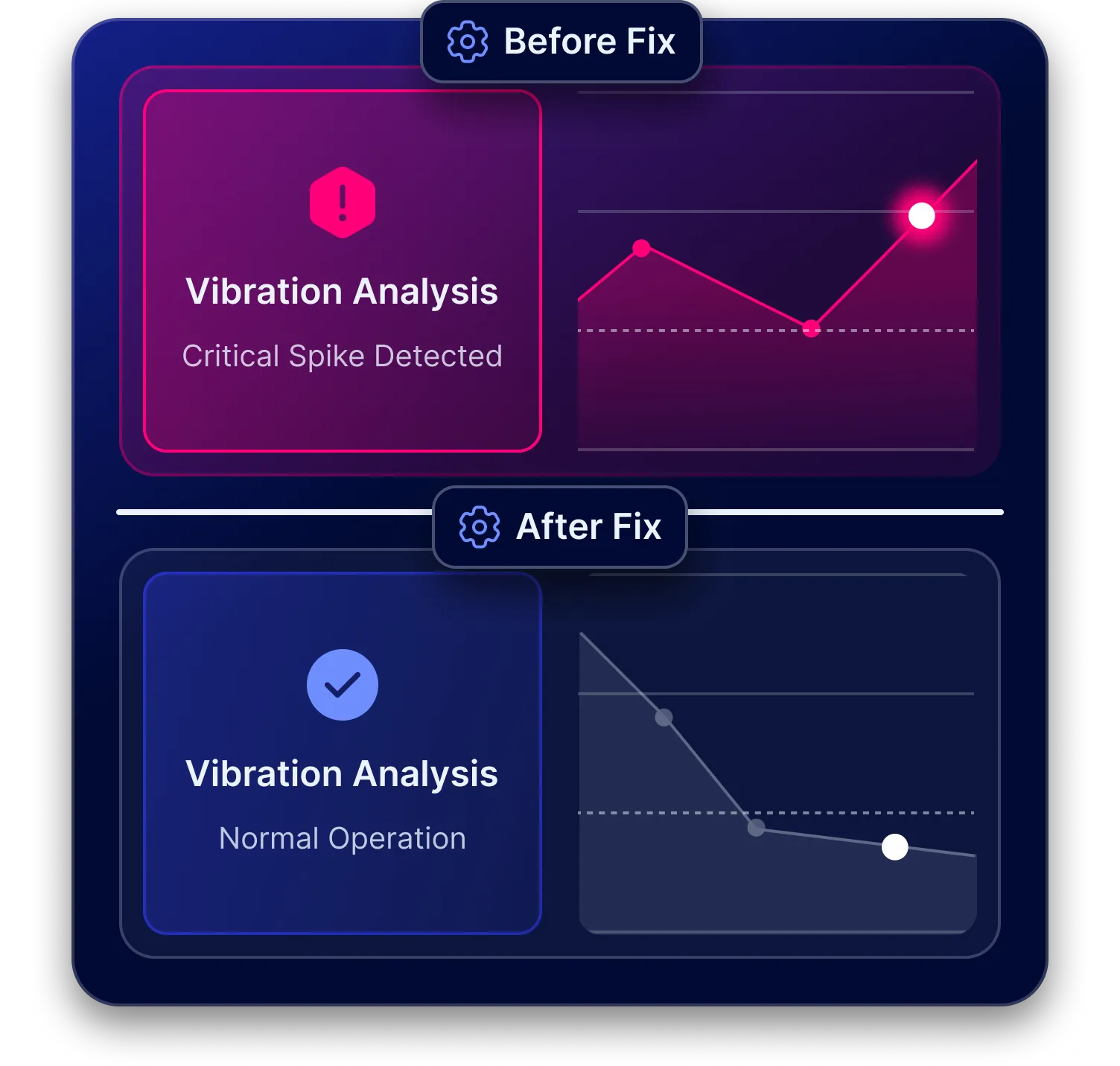
Verification Panel

Frequently Asked Questions

AI predictive maintenance works by continuously monitoring equipment through sensors (vibration, temperature, acoustic, current) and cameras. Machine learning models analyze these signals to identify patterns that precede failures—such as increasing vibration signatures or temperature anomalies. When the AI detects early warning signs, it predicts the likely failure mode and time-to-failure, giving maintenance teams advance notice to plan repairs.

Preventive maintenance follows a fixed schedule (e.g., replace bearings every 6 months) regardless of actual condition, which often means replacing parts too early or too late. Predictive maintenance uses real-time data and AI to determine when maintenance is actually needed based on equipment condition. This approach reduces unnecessary maintenance by 30-50% while also catching issues that scheduled maintenance would miss.

The ROI of predictive maintenance AI typically includes 30-50% reduction in unplanned downtime, 20-40% reduction in maintenance costs, 10-20% extension of equipment life, and significant improvements in OEE (Overall Equipment Effectiveness). Most manufacturers see payback within 6-12 months, with the largest savings coming from avoided production losses due to unexpected breakdowns.

AccelVeo's predictive maintenance can begin delivering value within weeks, not months. The AI agents connect to your existing sensors, PLCs, and cameras and start learning your equipment's normal operating patterns immediately. Initial anomaly detection begins quickly, with prediction accuracy improving continuously as the system accumulates more operational data from your specific equipment.

AI can monitor virtually any equipment that produces measurable signals—motors, pumps, compressors, conveyors, CNC machines, presses, HVAC systems, and more. AccelVeo combines traditional sensor data (vibration, temperature, pressure, current) with vision-based monitoring to detect visual signs of wear like leaks, corrosion, or unusual vibration that sensors alone might miss.

Reactive vs Preventive vs Predictive Maintenance

CriteriaReactivePreventivePredictive (AI)
ApproachFix after failureScheduled intervalsCondition-based, AI-driven
Downtime ImpactHigh - unplanned stopsModerate - planned stopsLow - just-in-time repairs
CostHighest (emergency + damage)Moderate (some waste)Lowest (optimized timing)
Equipment LifespanShortened by failuresStandard lifespanExtended 10-20%
Parts InventoryEmergency stockpilingOver-ordering commonOptimized parts ordering

Related Solutions

AI Agents

The autonomous agents that monitor equipment and predict failures 24/7.

Digital Twin

Real-time virtual models that contextualize equipment health data.

Supply Chain

Coordinate spare parts procurement with predicted maintenance needs.

AccelVeo Logo
Experience the Future of Factory Intelligence
See exactly how our agents detect defects and predict failures in a live, custom demonstration. No heavy integration required.
Book a Demo & Strategy Call